

When President Yoweri Kaguta Museveni takes to the skies above Uganda, he sees more than just land; he sees transformation. His recent aerial observations paint a picture of agricultural progress that has reshaped the nation’s landscape over recent decades. From the dairy farms dotting the former wilderness of the Cattle Corridor to the sprawling coffee gardens of Masaka-Rakai, the President’s words capture a narrative of deliberate agricultural expansion. Yet as we navigate 2026, this story of growth intersects with an urgent global challenge: climate change.
The View from Above: Mapping Uganda’s Agricultural Revolution.
The President’s flight path traces what could be called Uganda’s agricultural spine. In the Cattle Corridor that once was dismissed as iruungu or wilderness, fenced ranches now support thriving dairy and beef operations. This transformation represents more than infrastructure; it signals a fundamental shift in how Ugandans approach livestock management and land use.
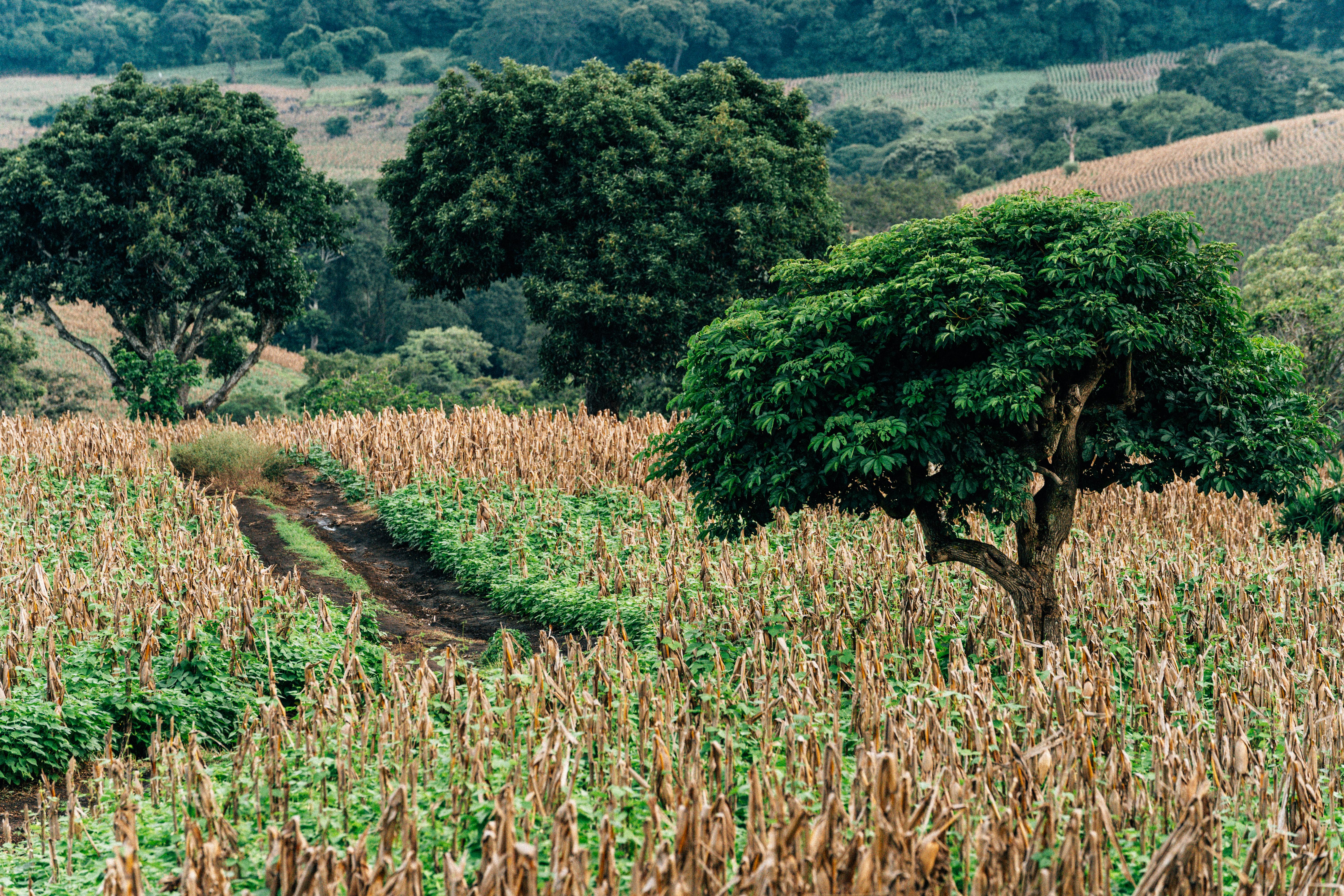
Moving southwest, the Masaka-Rakai-Ssembabule triangle tells a different story. Here, coffee has become the cornerstone crop, with an estimated 60% of homesteads participating in coffee cultivation. This isn’t accidental. For years, government programs have positioned coffee as a pathway to household income stability, and the adoption rates suggest these efforts have resonated with farming communities.
The diversity continues across regions. Kalangala’s islands showcase oil palm plantations that have converted previously underutilized land into productive agricultural zones. In Teso, citrus orchards add both economic value and nutritional diversity. Bundibugyo and Mukono’s cocoa and coffee gardens demonstrate how tree crops can provide long-term income streams. Meanwhile, the banana gardens of Bushenyi-Isingiro and the Arabica coffee zones of Zombo. Bugisu reflects how Uganda has leveraged its varied microclimates. To support different crops.
The scale becomes even more dramatic when considering the industrial agriculture sectors: sugar cane plantations spanning Busoga, Bunyoro, Luwero-Nakaseke, and Kayunga, alongside the palm oil estates in Maruzi, Lango, and the magnificent tea plantations across Tooro, Ankole, and Kigezi.
Beyond the Rhetoric: What the Numbers Actually Show.
Agricultural transformation in Uganda has been observable. Over the past twenty years, the country has experienced notable growth in production volumes across various commodities. Coffee exports, for example, have increased significantly, positioning Uganda as one of Africa’s top coffee producers. Farmers have also modernized the livestock sector by adopting better breeds and accessing improved veterinary services.
However, success in agriculture isn’t just about production volumes. It’s about sustainability, profitability, and resilience. This is where the President’s observations about tea pricing become particularly relevant. The tea sector’s challenges with low prices, attributed to inadequate fertilizer use and poor picking methods, reveal a deeper truth about Ugandan agriculture: expansion alone doesn’t guarantee prosperity.
The Climate Variable: An Unavoidable Reality for 2026.
Here’s what the aerial view cannot fully capture: the vulnerability of this agricultural transformation to climate change. Uganda is already experiencing the effects of shifting weather patterns, and these changes pose fundamental questions about the sustainability of current agricultural practices.
Rising temperatures across East Africa are altering traditional growing seasons. The predictable rain patterns that farmers have relied on for generations are becoming less reliable. Some regions experience prolonged droughts while others face increased flooding, sometimes within the same growing season. For a country whose economy depends heavily on rain-fed agriculture, these shifts represent an existential challenge.
Consider the coffee sector, which the President highlights as a success story. Coffee plants are highly sensitive to temperature and rainfall variations. Arabica coffee, grown in the highlands of Bugisu and Zombo, thrives in specific temperature ranges. As temperatures rise, suitable growing areas could shift to higher altitudes, potentially displacing current coffee zones. Research suggests that without adaptation measures, climate change could reduce Uganda’s coffee-suitable land by significant margins over the coming decades.
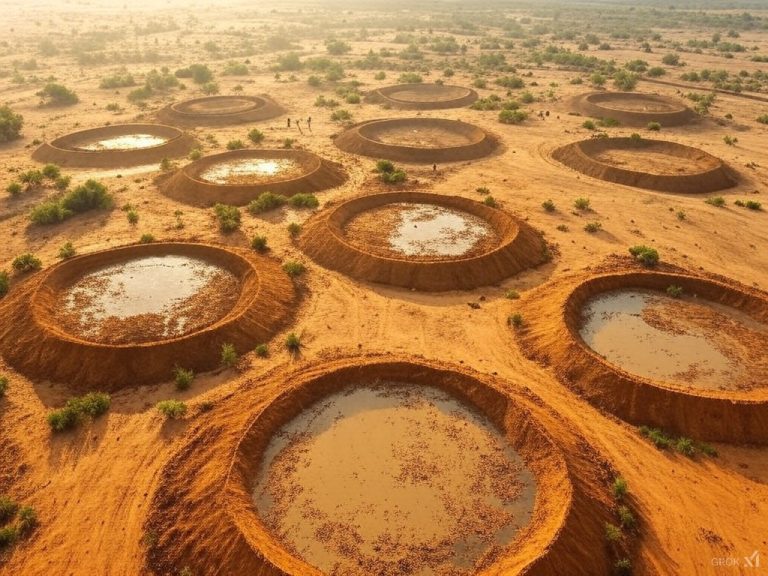
The dairy sector faces similar vulnerabilities. Cattle require substantial water resources and are sensitive to heat stress. In the Cattle Corridor, where rainfall is already marginal, climate change could exacerbate water scarcity and reduce pasture quality. The fenced, bush-cleared farms that represent progress today may require significant adaptation investments tomorrow, think water harvesting systems, drought-resistant fodder crops, and improved cooling systems for livestock.
The Fertilizer Paradox and Environmental Sustainability.
The President’s mention of fertilizer use in the tea sector opens another critical discussion. While fertilizers can boost yields in the short term, their environmental footprint and the sector’s dependence on them raise sustainability questions that become more pressing in a climate-changing world.
Uganda’s agricultural expansion has already contributed to deforestation and wetland degradation, changes that ironically make farming communities more vulnerable to the impacts of climate change. Wetlands act as natural water storage systems and climate buffers. Forest cover helps regulate local rainfall patterns and prevents soil erosion. As these natural systems are converted to farmland, the landscape becomes less resilient to climate shocks.
The industrial plantations of sugar cane, palm oil, and tea face particular scrutiny regarding their environmental impacts. Monoculture systems, while economically efficient, create ecological vulnerabilities. They’re more susceptible to pest outbreaks, require more chemical inputs, and offer less biodiversity. In a climate-changing world, agricultural diversity isn’t just an ecological preference; it’s a risk management strategy.
Adaptation: The Unspoken Chapter in Uganda’s Agricultural Story.
Moving forward requires acknowledging that the agricultural transformation the President describes must evolve to incorporate climate resilience. This doesn’t diminish past achievements; it recognizes new realities.
Climate-smart agriculture offers pathways forward. This includes practices like agroforestry, where trees are integrated with crops or livestock to provide shade, improve soil health, and diversify income sources. It means investing in water harvesting and irrigation systems so that farmers aren’t entirely dependent on unpredictable rainfall. It involves developing and distributing crop varieties that can withstand heat stress and drought.
For the coffee sector, this means gradually transitioning to more climate-resilient varieties or supporting farmers in higher-altitude areas. For the dairy industry, it could involve breeding programs focused on heat-tolerant cattle breeds or establishing more sophisticated fodder management systems.
The tea pricing challenges the President mentioned could actually become an opportunity to rethink the sector’s sustainability. Rather than simply increasing fertilizer use, the industry could invest in soil health, organic farming methods, and quality-focused production that commands premium prices in increasingly eco-conscious global markets.
A Vision That Must Evolve.
President Museveni’s observations from above capture genuine transformation. Ugandan farmers have converted wilderness into productive farmland, created thousands of jobs, and built agricultural value chains that drive the national economy. These achievements deserve recognition, and dismissing them would indeed ignore tangible progress.
However, the view from 2026 must incorporate what the aerial perspective cannot fully reveal: the climate realities that will shape agriculture’s future. The farms, plantations, and gardens visible from the President’s flight path exist in an environment that is measurably changing. Temperatures are rising, rainfall patterns are shifting, and extreme weather events are becoming more common.
In Conclusion.
The question isn’t whether Uganda’s agricultural transformation has been real; it clearly has been. The question is whether this transformation can evolve to remain viable in a future challenged by climate change. That evolution requires acknowledging vulnerabilities, investing in resilience, and ensuring that agricultural expansion doesn’t undermine the environmental systems that farming ultimately depends upon.
As Uganda looks forward from this moment of agricultural achievement, the challenge is to build on success while adapting to new realities. The magnificent view from above must be matched by wisdom on the ground, wisdom that recognizes both what has been accomplished and what must change to secure agricultural prosperity for generations to come.
About The Author

 English